From the archive

July 2026.

22 letters, newest first.

All months · Sep 2026 · Aug 2026 · Jul 2026 · Jun 2026 · May 2026
Daily · Friday · Books

The universe conspires.
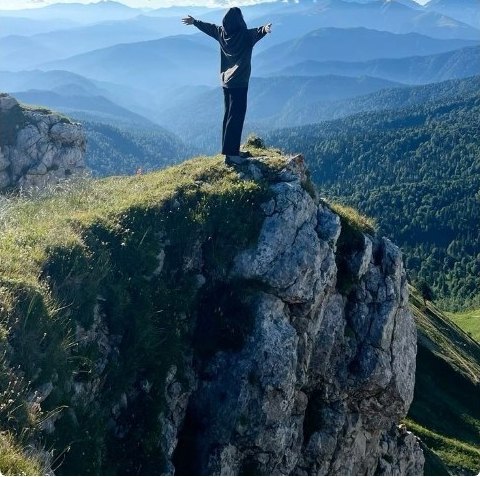
A person standing arms-wide on a mountain summit above blue ridgelines

Hi 🌿

Paulo Coelho wrote The Alchemist in just two weeks in 1987. His publisher printed 900 copies. It sold so poorly the contract was dropped.

He found another publisher. Then another country picked it up. Then another. Today it is one of the bestselling books in human history, translated into over 80 languages.

The book's most famous line is this:

“And, when you want something, all the universe conspires in helping you to achieve it.”

It's easy to dismiss this as wishful thinking. But Coelho isn't describing magic. He's describing something more subtle — the way that clarity of desire changes how you move through the world. What you notice. Who you talk to. What you're willing to try.

When you don't know what you want, everything looks like noise. When you do know, the same world starts to look like signal.

The universe doesn't change. Your attention does. And attention is everything.

This weekend — what is the one thing you actually want? Not the sensible thing. The real thing. Hold it clearly, and see what the week ahead brings toward you.

Have a kind weekend.

Sent Friday, July 31, 2026 · 6:00 AM PT
Daily · Thursday · Productivity

Twenty-four hours, yours.

A hiker on a forest trail with sunlight breaking through tall pines

Hi 🌿

Arnold Bennett was an Edwardian novelist and essayist who wrote one of the most quietly radical books about time ever published. It was called How to Live on 24 Hours a Day, and it came out in 1908.

The opening line has never left me:

“You wake up in the morning, and lo! your purse is magically filled with twenty-four hours of the unmanufactured tissue of the universe of your life.”

No one gets more. No one gets less. The billionaire and the student wake up to the same twenty-four hours. They are, Bennett says, the most precious of all possessions.

And yet — most of us spend the first hour of the day in a kind of fog. Reactive, scrolling, half-present. The purse opens and we immediately start handing coins to things that don't matter.

Bennett's provocation isn't about productivity in the hustle sense. It's simpler and stranger than that. He's asking: do you treat your time as the miracle it is?

Every morning you are given everything. The question is only what you do with it.

This Thursday — before the day takes over — take one minute to decide what this particular twenty-four hours is for. Not the whole list. Just the one thing that would make today feel like yours.

Have a kind morning.

Sent Thursday, July 30, 2026 · 6:00 AM PT
Daily · Wednesday · Wisdom

Act now, without delay.

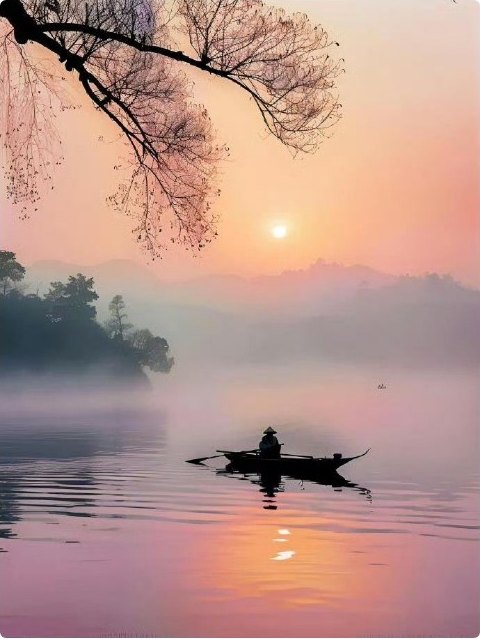
A lone boatman on a misty lake at sunrise beneath blossoming branches

Hi 🌿

Simone de Beauvoir was a French philosopher, novelist, and one of the most important thinkers of the 20th century. She spent her life examining what it means to be free — and what it costs to stay comfortable instead.

This line of hers is short and almost unbearably direct:

“Change your life today. Don't gamble on the future, act now, without delay.”

There is a particular kind of waiting most of us are very good at. Waiting until the timing is right. Waiting until we feel ready. Waiting until we have more — more money, more certainty, more confidence, more clarity about what comes next.

Beauvoir understood something about that waiting. It isn't patience. It's a bet — a gamble that the future will be more forgiving than the present, that circumstances will eventually arrange themselves into the perfect moment to begin.

They rarely do.

The conditions you are waiting for will not arrive. They have to be made.

Today doesn't have to be dramatic. It just has to be one small move in the direction of the life you mean to live. That is enough. That is everything.

Have a kind morning.

Sent Wednesday, July 29, 2026 · 6:00 AM PT
Daily · Tuesday · Wisdom

Knowing yourself is true wisdom.

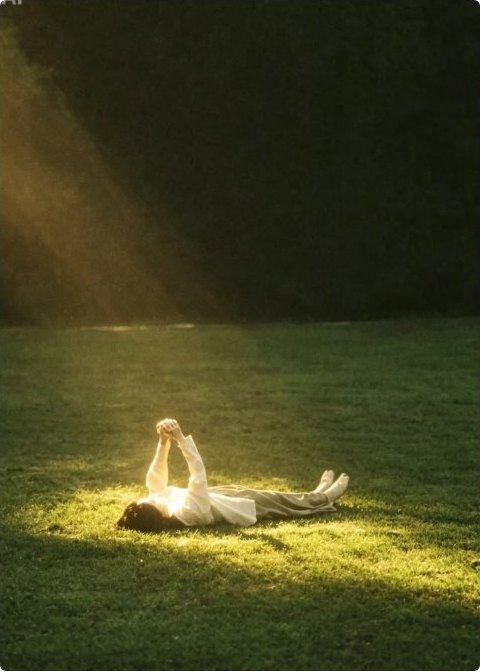
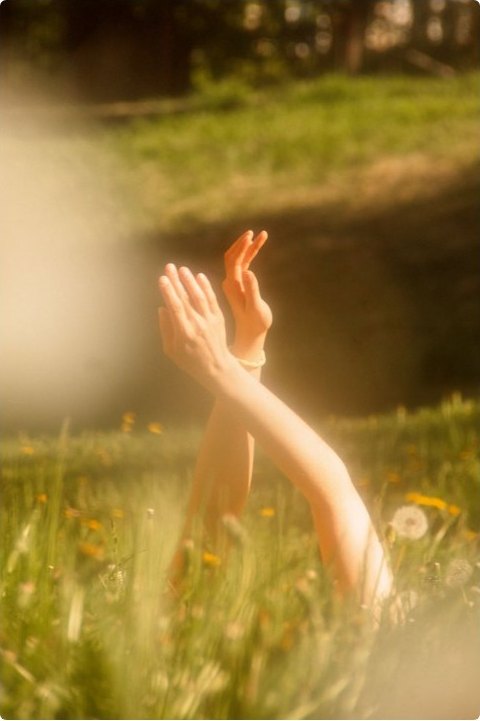
A person lying in a sunlit patch of grass, arms raised toward the light

Hi 🌿

Lao Tzu wrote the Tao Te Ching around the 6th century BC — 81 short verses on the nature of existence, leadership, and the art of living well. It is one of the most translated books in history.

One of its most enduring lines is deceptively simple:

“Knowing others is intelligence. Knowing yourself is true wisdom. Mastering others is strength. Mastering yourself is true power.”

We live in a world that rewards knowing others. The networker. The strategist. The one who reads the room, anticipates the move, understands what everyone else wants.

Lao Tzu isn't dismissing that. He's placing something above it.

Because you can know a thousand people and still be a stranger to yourself. You can master every room and still be mastered by your own fears, your own patterns, the same reactions running on the same loops.

The hardest territory to map is the one inside.

Today — not as a project, just as a quiet question — what is one thing you know to be true about yourself that you rarely say out loud? Not a flaw to fix. Just a truth to hold.

That's the beginning of knowing.

Have a kind morning.

Sent Tuesday, July 28, 2026 · 6:00 AM PT
Daily · Monday · Productivity

Sit quietly in a room.

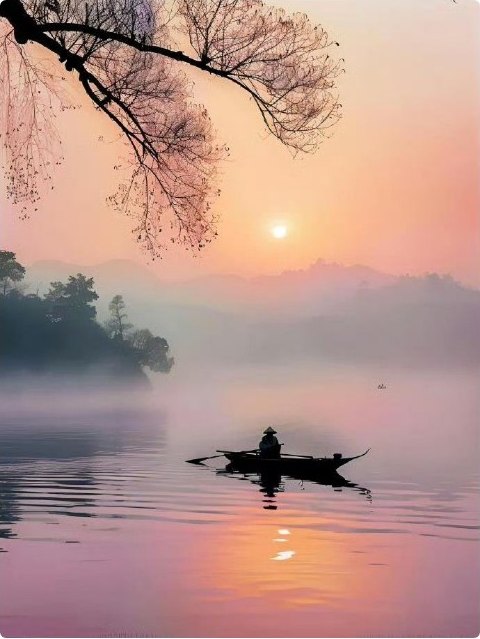
A lone boatman on a misty lake at sunrise beneath blossoming branches

Hi 🌿

Blaise Pascal was a 17th century French mathematician, physicist, and philosopher. He invented one of the first mechanical calculators at age nineteen. He also wrote one of the most quietly devastating observations about the human condition:

“All of humanity's problems stem from man's inability to sit quietly in a room alone.”

He wrote that in 1654. It has never been more true than now.

Think about what we reach for the moment we are alone and still. The phone. The noise. The scroll. Anything to avoid the particular discomfort of just being — no input, no stimulation, no one needing anything from us.

Pascal wasn't prescribing meditation. He was diagnosing something deeper — that most of our restlessness, our busyness, our endless doing, is really a flight from ourselves. We stay in motion because stillness asks us to face what's there when we stop.

The room is not the problem. What we find in the room is what we've been avoiding.

This Monday — before the week accelerates — try five minutes of nothing. No podcast, no scroll, no task. Just the room. Just you. See what comes up.

That's the whole practice.

Have a kind morning.

Sent Monday, July 27, 2026 · 6:00 AM PT
Daily · Friday · Books

Your one wild and precious life.

An illustrated figure sitting in tall grass under a pale golden sky

Hi 🌿

Mary Oliver spent most of her life walking. Through forests, along shorelines, across fields at dawn. She carried a notebook. She paid attention.

And from all that attention, she asked one question that has stopped more people mid-sentence than almost anything ever written:

“Tell me, what is it you plan to do with your one wild and precious life?”

It's from a poem called “The Summer Day.” The question arrives at the end, quietly, after she has been watching a grasshopper clean her face in the grass.

It doesn't sound like a challenge. It lands like one.

Not: what have you accomplished? Not: what does your resume say? Not: what do others expect of you?

What do you plan to do with it?

The word “wild” is doing a lot of work in that line. Oliver isn't asking about your calendar. She's asking about the part of you that hasn't been scheduled yet — the unlived version, the direction you keep meaning to turn toward.

This weekend — not forever, just this weekend — let the question sit with you. You don't have to answer it. You just have to let it be asked.

Have a kind weekend.

Sent Friday, July 24, 2026 · 6:00 AM PT
Daily · Thursday · Productivity

Victory over yesterday's self.

An illustrated figure sitting in tall grass under a pale golden sky

Hi 🌿

Miyamoto Musashi was a 17th century Japanese swordsman who became a legend — not just for his skill, but for his philosophy. He never lost a duel. He also spent years wandering, thinking, and writing.

In his final work, written days before his death, he left this:

“Today is victory over yourself of yesterday.”

Seven words. No footnotes needed.

Most of us measure ourselves against others — who is further along, who has more, who got there faster. It's an exhausting comparison because the variables are never equal and the finish line keeps moving.

Musashi was pointing somewhere else entirely. The only meaningful competition is with who you were yesterday. Did you understand something a little more clearly? Did you show up a little more honestly? Did you do the work you said you would?

Small victories over yesterday compound into a life.

You don't have to be remarkable today. You just have to be slightly better than yesterday's version of you. That is the whole practice. That has always been enough.

Have a kind morning.

Sent Thursday, July 23, 2026 · 6:00 AM PT
Daily · Wednesday · Wisdom

Come to your real work.

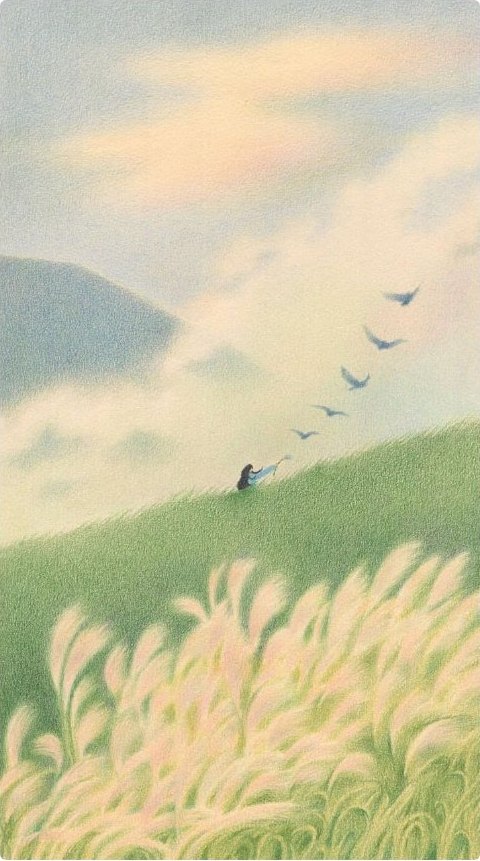
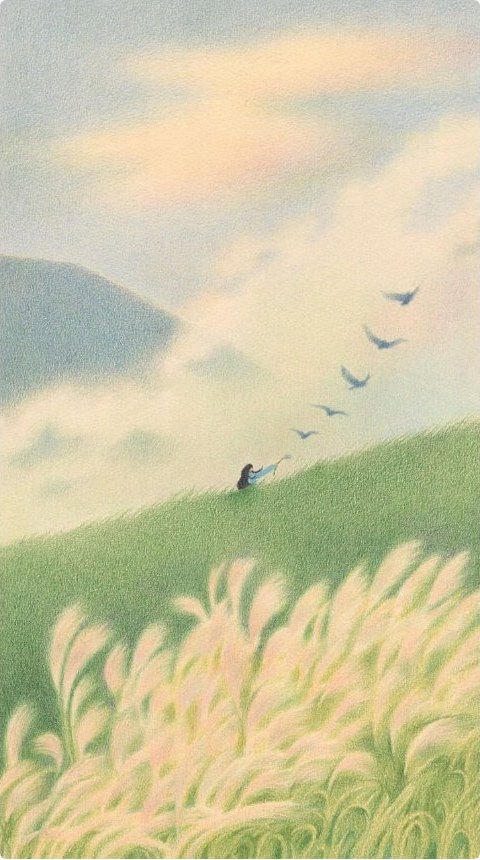
An illustrated hillside of pink grasses with birds rising into a pastel sky

Hi 🌿

Wendell Berry is a Kentucky farmer, poet, and essayist who has spent decades writing about the relationship between people and the land they live on. He writes slowly, by hand, without a computer.

He has also written one of the most quietly radical lines about what happens when we hit a wall:

“It may be that when we no longer know what to do, we have come to our real work.”

Most of us treat not knowing what to do as a problem. Something to fix, push through, or distract ourselves from. We call it being stuck. We call it failure. We reach for a plan.

Berry is suggesting it might be something else entirely.

The work we know how to do — the comfortable work, the proven work, the work we've already mastered — that isn't always the real work. The real work often begins precisely where our competence ends.

Not knowing is not the obstacle. It may be the threshold.

If you don't know what to do today — really don't know — stay with that for a moment before you reach for a solution. You might be standing exactly where you need to be.

Have a kind morning.

Sent Wednesday, July 22, 2026 · 6:00 AM PT
Daily · Tuesday · Wisdom

First, it must burn.

An illustrated figure on a green shore watching gulls over deep blue water

Hi 🌿

Octavia Butler wrote science fiction. But what she was really writing about was transformation — what it costs, what it requires, what becomes possible on the other side of it.

This line has stayed with readers long after the stories themselves:

“In order to rise from its own ashes, a phoenix first must burn.”

It sounds like a comfort. It isn't, exactly. It's more honest than that.

Most of us want the rising without the burning. We want to be transformed by the easy version of change — the one that doesn't require losing anything, doesn't require the discomfort, doesn't require the in-between period where nothing is certain and everything feels wrong.

But the phoenix doesn't get to skip the fire. The fire is the process. The ash is the necessary thing.

Whatever is burning in your life right now — it may be the beginning of something, not the end of it.

This isn't a reason to seek suffering. It isn't a promise that everything hard leads somewhere good. But it is a quiet reminder: the burning and the rising are not two separate events. They are one.

Have a kind morning.

Sent Tuesday, July 21, 2026 · 6:00 AM PT
Daily · Monday · Productivity

Don't stop for every dog.

A person sitting on a lawn beneath a broad tree as sunbeams break through

Hi 🌿

Winston Churchill led Britain through its darkest hours — bombed cities, impossible odds, a continent falling to tyranny. He was not a man who paused for every distraction.

This line of his is deceptively simple:

“You will never reach your destination if you stop and throw stones at every dog that barks.”

The dogs are everywhere. The critical comment. The email that arrives at the wrong moment. The meeting that shouldn't have been called. The argument that wants your attention. The noise that has nothing to do with where you're going.

Most of us don't fail to reach our destinations because the road is too hard. We fail because we stop too many times for things that don't matter — and by the time we look up, the day is gone.

Not every bark deserves a response. Not every provocation deserves your energy.

This Monday — keep walking. The destination is still ahead. The dogs will always be there. You don't have to stop for any of them.

Have a kind morning.

Sent Monday, July 20, 2026 · 6:00 AM PT
Daily · Friday · Books

A why to live.

Sunrise over a still mountain lake framed by leaning trees

Hi 🌿

Viktor Frankl was a psychiatrist in Vienna when he was arrested by the Nazis in 1942. He spent three years in concentration camps — Auschwitz among them. He lost his wife, his parents, his brother.

He survived. And what he observed in those years became one of the most important books of the twentieth century.

“Those who have a 'why' to live can bear almost any 'how'.”

Frankl watched people in conditions of unimaginable suffering. What he noticed was this: the ones who endured were not always the physically strongest. They were the ones who had something — someone, some purpose, some future meaning — to live toward.

The “how” of life — the difficulty, the loss, the uncertainty — becomes bearable when there is a “why” underneath it.

Meaning is not found. It is made. It is chosen, even in the hardest circumstances.

This weekend — set down the how for a moment. The logistics, the problems, the things that feel impossibly hard. Ask instead: what is the why underneath all of it?

You already know. You just don't always stop long enough to remember.

Have a kind weekend.
Sent Friday, July 17, 2026 · 6:00 AM PT
Daily · Thursday · Productivity

What are we busy about?

An open notebook, pen and matcha in tall sunlit grass

Hi 🌿

Henry David Thoreau spent two years living alone in a small cabin he built himself on the edge of Walden Pond in Massachusetts. He wasn't hiding from the world. He was running an experiment.

The experiment was simple: what happens when you strip life down to what actually matters?

What he found wasn't peace, exactly. It was clarity.

“It is not enough to be busy. The question is: what are we busy about?”

Most of us are genuinely busy. Full calendars, long task lists, days that evaporate by 5pm. And yet at the end of the week something quietly nags — the sense that the motion didn't add up to much.

Thoreau isn't attacking busyness. He's asking something earlier and harder: is the busyness pointed at anything real?

Activity is not the same as progress. Movement is not the same as direction.

This Thursday — before the day fills itself in — ask the Thoreau question. Not how much can I get done. But what am I actually doing this for?

One clear answer to that question is worth more than a full day of unchecked boxes.

Have a kind morning.

Sent Thursday, July 16, 2026 · 6:00 AM PT
Daily · Wednesday · Wisdom

Have patience with everything unresolved.

An illustrated figure on a green shore watching gulls over deep blue water

Hi 🌿

In 1903, a nineteen-year-old military school student named Franz Kappus wrote a letter to the poet Rainer Maria Rilke, asking for his opinion on some poems.

Rilke wrote back. And then again. Over the next five years, ten letters passed between them. Rilke never met Kappus in person. But what he wrote to that young stranger became one of the most widely read collections of letters ever published.

This is from the fourth letter:

“Have patience with everything unresolved in your heart. Try to love the questions themselves, as if they were locked rooms or books written in a foreign language. Don't search for the answers, which could not be given to you now, because you would not be able to live them. And the point is, to live everything. Live the questions now.”

Most of us treat the unresolved things in our lives as problems to be solved as quickly as possible. The relationship that isn't clear. The direction that hasn't arrived. The version of ourselves we haven't become yet.

Rilke is suggesting something harder and more generous than that.

The questions are not obstacles. They are the work.

Perhaps someday — far in the future — without even noticing, you will live your way into the answer.

Have a kind morning.

Sent Wednesday, July 15, 2026 · 6:00 AM PT
Daily · Tuesday · Wisdom

Your joy is your sorrow unmasked.

Light falling through trees onto a meadow of pink wildflowers

Hi 🌿

Kahlil Gibran published The Prophet in 1923. It has never gone out of print.

The book is a series of farewell teachings from a prophet about to sail home after twelve years in a foreign city. The people gather and ask him about joy, sorrow, love, work, death. He answers each one — not with comfort exactly, but with something truer than comfort.

On joy and sorrow, he says this:

“Your joy is your sorrow unmasked. And the selfsame well from which your laughter rises was oftentimes filled with your tears.”

Most of us try to have one without the other. We want the joy without the grief, the love without the loss, the openness without the vulnerability that comes with it.

Gibran is pointing at something most of us already know but rarely say out loud — that the capacity for one is the capacity for both. The person who laughs deeply is the same person who aches deeply. The well is the same well.

You cannot protect yourself from sorrow without also protecting yourself from joy.

This isn't a reason to be sad. It's a reason to stay open. To not close yourself off after the hard thing. The depth of what you feel in either direction is the same depth — and it is yours.

Have a kind morning.

Sent Tuesday, July 14, 2026 · 6:00 AM PT
Daily · Monday · Productivity

Start close in.

An illustrated hillside of pink grasses with birds rising into a pastel sky

Hi 🌿

David Whyte is an Irish poet who has spent decades writing about work, courage, and what it means to show up fully to a life. He consults with organizations around the world — not with spreadsheets, but with poetry.

One of his most grounding instructions is this:

“Start close in. Don't take the second step before the first.”

It sounds almost too simple. Most of us are already planning step five while we're still standing still.

We map the whole journey before we leave the door. We strategize the outcome before we begin the work. We overthink the middle before we've taken the start.

Whyte isn't saying think small. He's saying think near. The next right thing. The thing directly in front of you. The first word, the first call, the first small movement toward the thing you've been circling.

The whole path becomes visible only after you take the first step.

This Monday — before the week gets complicated — what is the one closest thing? Not the whole plan. Just the beginning of it.

Start there.

Have a kind morning.

Sent Monday, July 13, 2026 · 6:00 AM PT
Daily · Friday · Books

The gifts of imperfection.

Hands raised toward the light in a sunlit meadow of dandelions

Hi 🌿

Brené Brown spent years studying shame, vulnerability, and what it means to truly belong. What she found surprised her.

Most of us spend enormous energy trying to fit in — adjusting ourselves, editing our edges, performing a version of who we think other people want to see. Brown noticed something important about that effort.

“Belonging is the innate human desire to be part of something larger than us. But true belonging only happens when we present our authentic selves to the world.”

Fitting in and belonging look similar from the outside. They feel completely different from the inside.

Fitting in asks: what do I need to become to be accepted here? Belonging says: I am accepted here as I already am.

Most of us have spent so long fitting in that we've forgotten what belonging actually feels like. We've mistaken the relief of being tolerated for the warmth of being known.

You cannot belong somewhere you are pretending to be someone else.

This weekend — in whatever room you walk into, whatever conversation you show up to — try showing up a little more as yourself. Not performing. Not editing. Just present, as you actually are.

That's where belonging lives.

Have a kind weekend.
Sent Friday, July 10, 2026 · 6:00 AM PT
Daily · Thursday · Productivity

What you love, do.

Writing in a notebook while lying in a hammock at golden hour

Hi 🌿

Rumi was a 13th century Persian poet and theologian. He wrote tens of thousands of verses — not because someone told him to, not because it was efficient, but because he couldn't stop.

He understood something most productivity systems miss entirely.

“Let the beauty of what you love be what you do.”

It sounds like advice for artists. It isn't. It's advice for everyone who has ever sat down to work and felt like they were pushing a boulder uphill.

The most productive people aren't the most disciplined. They're the most aligned. Their work and their love are pointing in the same direction — and that alignment generates an energy that no morning routine or time-blocking system can manufacture.

Most of us optimize the wrong end of the problem. We try to do more of what we don't love more efficiently. Rumi is asking the earlier question: what if you started with what you love?

The work you love doesn't ask for motivation. It asks for time.

This Thursday — before the task list takes over — is there one thing on that list you actually love? Start there. Let that be the thing.

Have a kind morning.

Sent Thursday, July 9, 2026 · 6:00 AM PT
Daily · Wednesday · Wisdom

The sun never says you owe me.

Golden light over a still lake ringed by green hills

Hi 🌿

Hafiz was a 14th century Persian poet who spent his life writing about love — not the romantic kind, but the kind that doesn't ask for anything back.

One of his most beloved lines goes like this:

“Even after all this time, the sun never says to the earth: you owe me.”

He continues: “Look what happens with a love like that. It lights the whole sky.”

Sit with that for a moment.

The sun has been rising every morning for four and a half billion years. It has never once presented an invoice. It has never withheld light because yesterday's warmth went unacknowledged. It just gives — completely, reliably, without condition.

Most of us give differently. We give and we track. We help and we notice when it isn't returned. We offer something and quietly wait to see what comes back.

Hafiz isn't judging that. He's just pointing at something else — a different kind of giving that doesn't deplete because it doesn't keep score.

Give like the sun. Light the whole sky.

Have a kind morning.

Sent Wednesday, July 8, 2026 · 6:00 AM PT
Daily · Tuesday · Wisdom

Take the rest as it happens.

A person sitting alone on a lawn as sunbeams fall through a great tree

Hi 🌿

Epictetus was born into slavery in ancient Rome. He had no property, no freedom, no guarantee of tomorrow. And yet he became one of the most influential philosophers who ever lived.

His entire philosophy rested on a single distinction.

“Make the best use of what is in your power, and take the rest as it happens.”

Two things. What is in your power — your thoughts, your choices, your effort, your response. And everything else — the weather, other people's opinions, outcomes, timing, luck.

Most of our suffering, Epictetus noticed, comes from confusing the two. We exhaust ourselves trying to control what was never ours to control. We neglect what actually is.

You cannot manage the world. You can only manage yourself inside it.

Today will bring things you didn't plan for — a conversation that goes sideways, a task that takes longer, a moment that doesn't go the way you hoped. That part isn't yours.

Your response is. That's always been enough.

Have a kind morning.

Sent Tuesday, July 7, 2026 · 6:00 AM PT
Daily · Monday · Productivity

Do the right things.

A lone figure in a chair looking out at a hazy shoreline through a window

Hi 🌿

Peter Drucker spent decades studying how organizations work — and more importantly, how they fail. He watched smart, capable people work themselves into exhaustion doing things that never should have been done in the first place.

His conclusion was quiet and devastating.

“There is nothing quite so useless as doing with great efficiency something that should not be done at all.”

Most productivity advice starts with the question: how do I do this faster? Drucker was asking something earlier and harder — should I be doing this at all?

Efficiency is a refinement. Effectiveness is a choice. You can be extraordinarily efficient at the wrong things and still end the week with nothing that matters to show for it.

The calendar fills itself. The priorities don't.

Monday morning is the best moment to ask the Drucker question before the week takes over. Not what's on the list. Not what's urgent. What actually needs to happen this week — and what on this list should probably not be done at all?

Cross one thing off before you start. Not because you finished it. Because it was never yours to do.

Have a kind morning.

Sent Monday, July 6, 2026 · 6:00 AM PT
Daily · Thursday · Productivity

We waste a great deal of it.

A tree-lined country road at sunrise, light breaking through the branches

Hi 🌿

Seneca wrote On the Shortness of Life around 49 AD. He was addressing a friend who kept saying he didn't have enough time.

Seneca's response was not sympathetic.

“It is not that we have a short time to live, but that we waste a great deal of it.”

He goes on: life is long enough — abundantly long — if you know how to use it. The problem isn't scarcity. The problem is how quietly and willingly we hand our hours away.

To distraction. To obligations we never chose. To the slow drift of days that feel full but leave us wondering where they went.

Seneca wasn't talking about hustle. He wasn't saying do more. He was saying something more uncomfortable than that — that most of us are not victims of time. We are volunteers.

The hours don't disappear. We give them away.

Today is Thursday. The week is almost done. Before the weekend absorbs it — what is one thing you meant to do this week that still hasn't happened? Not a task. Something that matters. Put it in today.

Have a kind morning.

Sent Thursday, July 2, 2026 · 6:00 AM PT
Daily · Wednesday · Wisdom

The rarest form of generosity.

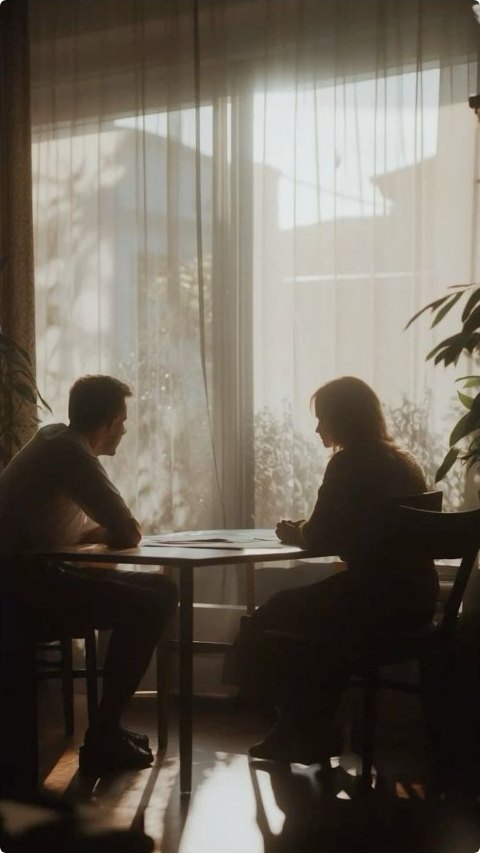
Two people in conversation at a table by a sunlit curtained window

Hi 🌿

Simone Weil was a French philosopher, mystic, and activist who spent much of her short life thinking about what it means to truly see another person.

She didn't write much about productivity or self-improvement. She wrote about attention — what it costs, what it gives, what it means to offer it fully.

“Attention is the rarest and purest form of generosity.”

Sit with that for a moment.

Not money. Not time. Not even love — at least not love as we usually perform it. Attention. The act of turning toward someone or something completely, without the part of your mind already composing its response, already drifting to the next thing.

Most of us are generous with our presence but stingy with our attention. We show up but we're half somewhere else. We listen but we're already waiting to speak.

Full attention is a gift so rare most people have never received it.

Today, just once — in a conversation, in a moment, in a meal — try to be completely there. Not performing presence. Actually present.

That's the whole practice. That's everything.

Have a kind morning.

Sent Wednesday, July 1, 2026 · 6:00 AM PT
Have these in your inbox

A small letter, every weekday morning.

Get tomorrow's letter and every one after. Free. No upsells. Unsubscribe in one click.

Subscribe →