From the archive

August 2026.

21 letters, newest first.

All months · Sep 2026 · Aug 2026 · Jul 2026 · Jun 2026 · May 2026
Daily · Monday · Productivity

Take the rest as it happens.
A person on a bench looking out over a green coastal cliff and sea

Hi 🌿

Epictetus was a Greek Stoic philosopher born into slavery in the first century AD. He could not control where he was born, who owned him, or what was done to his body. What he could control — and what he spent his life teaching — was the mind's response to all of it.

From the Enchiridion, his compact guide to living well:

“Make the best use of what is in your power, and take the rest as it happens.”

It sounds simple. It is one of the hardest things to actually do.

Most of our energy on any given Monday goes toward things we cannot control: how quickly others respond, whether the plan unfolds the way we imagined, what the week will ultimately bring. We push against the unpredictable and exhaust ourselves on outcomes that were never ours to determine.

Epictetus isn't suggesting passivity. He was anything but passive. He's drawing a line — a clean, honest line — between what belongs to you and what doesn't. Your effort, your attention, your choices, your response: yours. Everything else: not yours.

The practice is learning to pour your energy only into the first category, and to hold the second one lightly.

Do your best work. Then release the outcome. That is the whole practice.

This Monday — what is actually in your power today? Start there. Let the rest come as it comes.

Have a kind morning.
Sent Monday, August 31, 2026 · 6:00 AM PT
Daily · Friday · Books

Suffering is optional.

A figure dancing into the sun on a headland at golden hour

Hi 🌿

Haruki Murakami is one of the most widely read novelists in the world. He's also a serious long-distance runner who has completed dozens of marathons and ultramarathons. What I Talk About When I Talk About Running is his memoir about both — and the two things turn out to be the same thing.

From that book, he left us this:

“Pain is inevitable. Suffering is optional.”

He's talking about running — about the moment in a long race when your legs are burning and everything in you wants to stop. The pain, he says, is simply a fact of the distance. You cannot run far and not hurt. That part isn't a choice.

But suffering — the story you tell about the pain, the meaning you assign it, the way you turn a physical sensation into a verdict about yourself — that part is optional. You can hurt and still keep moving. You can feel the weight of something difficult and not collapse under it.

This isn't about toughening up or pushing through. It's something quieter. It's the recognition that pain and suffering aren't the same thing — that the experience of difficulty doesn't have to become an identity.

You can carry something hard without becoming defined by how heavy it is.

This weekend — whatever you're carrying — try separating the fact of it from the story about it. The pain may be real. The suffering can be put down.

Have a kind weekend.

Sent Friday, August 28, 2026 · 6:00 AM PT
Daily · Thursday · Productivity

No struggle, no progress.

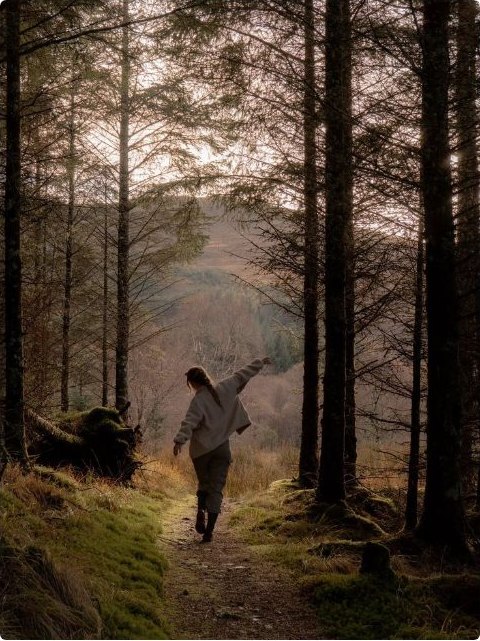
A walker on a mossy woodland trail in autumn light

Hi 🌿

Frederick Douglass was born into slavery in Maryland in 1818. He taught himself to read in secret, escaped north at twenty years old, and became one of the most powerful voices in American history — a writer, orator, and abolitionist who spent his life fighting for human dignity.

From that life, he drew this:

“If there is no struggle, there is no progress.”

We live in a time that often frames struggle as a problem to be solved — something to eliminate, minimize, or at least hide. We want results without friction, growth without difficulty, change without the uncomfortable in-between.

Douglass isn't romanticizing hardship. He knew real hardship. He's making a different observation: that the struggle is not separate from the progress. It is the mechanism of it. The resistance is what builds the strength. The difficulty is what makes the learning stick. The friction is what produces the change.

Whatever you're finding hard right now — the project that isn't moving fast enough, the skill you're still developing, the goal that keeps requiring more than you expected — the struggle isn't evidence that something is wrong.

The struggle is evidence that something real is happening.

This Thursday — where is the friction in your work? That's not the obstacle. That's the path.

Have a kind morning.

Sent Thursday, August 27, 2026 · 6:00 AM PT
Daily · Wednesday · Wisdom

Less and less afraid.

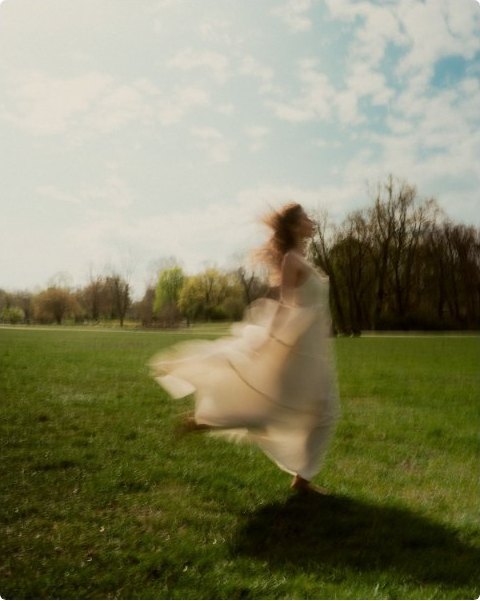
A figure turning in a bright open field, dress caught in motion

Hi 🌿

Audre Lorde was a poet, essayist, and activist who spent her life naming things that most people preferred to leave unnamed. She wrote about race, gender, fear, power, and what it actually costs to live as yourself — with a precision and warmth that still feels urgent.

She wrote this:

“When I dare to be powerful — to use my strength in the service of my vision — then it becomes less and less important whether I am afraid.”

Most of us are waiting to feel unafraid before we begin. Waiting for the fear to pass, for the confidence to arrive, for the conditions to be right enough that acting feels safe. We think courage is the absence of fear. We think powerful people don't feel what we feel.

Lorde is pointing somewhere entirely different. She isn't saying the fear goes away. She's saying something shifts when you act anyway — when you use your strength in the service of something real. The fear doesn't disappear. It just becomes less relevant.

The work, the vision, the thing you're trying to do — it becomes louder than the fear. Not because you conquered it, but because you chose something more important.

Courage isn't fearlessness. It's deciding that your vision matters more than your worry about it.

This Wednesday — one small act of daring. In the service of something you actually care about. Fear can come along. It just doesn't have to lead.

Have a kind morning.

Sent Wednesday, August 26, 2026 · 6:00 AM PT
Daily · Tuesday · Wisdom

Cross the sea.

Sunlit shallow water breaking over a bright shoreline

Hi 🌿

Rabindranath Tagore was a Bengali poet, philosopher, and the first non-European to win the Nobel Prize in Literature. He wrote in both Bengali and English, and his work moves between the lyrical and the deeply practical — often in the same breath.

He left behind this:

“You can't cross the sea merely by standing and staring at the water.”

It sounds obvious. And it is. That's why it lands.

We all have a sea we're not crossing. A conversation we keep rehearsing but never having. A project we keep planning but never starting. A change we keep meaning to make when the conditions are finally right — when we feel more ready, more certain, more prepared.

But the sea doesn't care how long you've been standing on the shore. It doesn't reward watching. It doesn't get smaller the more you study it. It stays exactly as wide as it is, waiting not for your confidence but for your first step.

Tagore isn't saying the crossing will be easy. He's saying something simpler: the crossing cannot begin while you remain on the shore.

Readiness isn't a feeling that arrives before you begin. It's the thing that builds as you go.

This Tuesday — what is the sea you've been staring at? You don't have to cross it all today. Just step in.

Have a kind morning.

Sent Tuesday, August 25, 2026 · 6:00 AM PT
Daily · Monday · Productivity

In that space is our power.

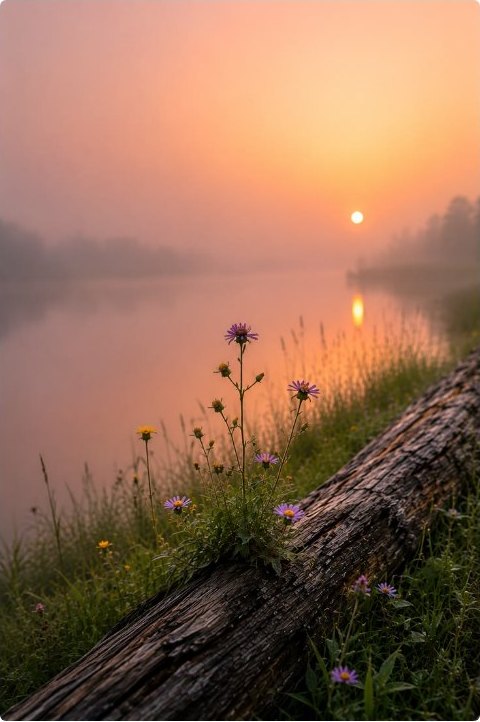
Wildflowers and a fallen log by a misty lake at sunrise

Hi 🌿

Viktor Frankl was a psychiatrist who survived four Nazi concentration camps — Auschwitz among them. He lost nearly everything. And from that experience he drew one of the most profound observations about human freedom ever written.

He described it like this:

“Between stimulus and response there is a space. In that space is our power to choose our response. In our response lies our growth and our freedom.”

Most of us live as if the stimulus and the response are one thing — as if the frustrating email, the difficult conversation, the Monday morning mood automatically produces what follows. We feel triggered and we react, and the whole thing happens so fast it barely feels like a choice.

But Frankl — who had every reason to believe human freedom was an illusion — insisted that the space exists. Even when it's very small. Even when everything around you is trying to collapse it. There is always a breath, a beat, a moment between what happens to you and what you do next.

That gap is where you live. That gap is where the whole of your character is built, one response at a time.

You cannot always control what arrives. But you can learn to lengthen the space before you answer it.

This Monday — before you react to the first hard thing, try to find the space. Just notice it's there. That's enough to begin.

Have a kind morning.

Sent Monday, August 24, 2026 · 6:00 AM PT
Daily · Friday · Books

Look at yourself gently.

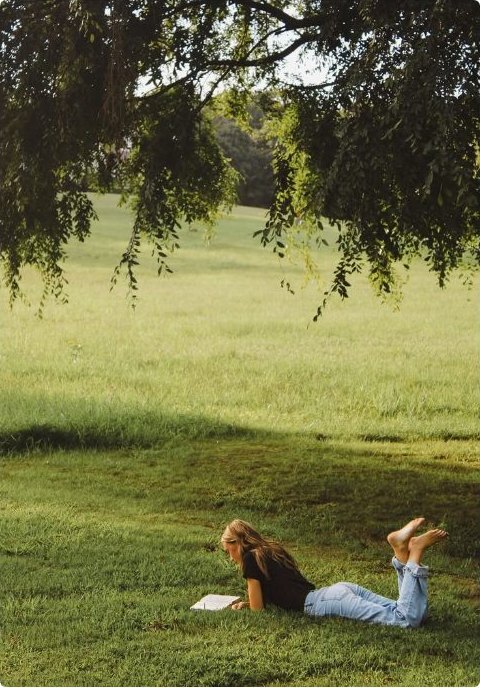
Reading on the grass in dappled shade beneath a willow

Hi 🌿

Pema Chödrön is an American Buddhist teacher and the author of When Things Fall Apart — one of the most quietly powerful books written about how to be with difficulty. She has spent decades teaching that the path toward peace runs through, not around, our own discomfort.

This passage of hers stops most people cold the first time they read it:

“The most fundamental aggression to ourselves, the most fundamental harm we can do to ourselves, is to remain ignorant by not having the courage to look at ourselves honestly and gently.”

Notice what she pairs together: honesty and gentleness. Not one or the other.

Most of us swing between two extremes. We are either harshly self-critical — cataloguing our failures with a precision we'd never apply to someone we love — or we avoid looking altogether, keeping ourselves distracted enough that the harder truths never quite surface.

Chödrön is describing a third way: the courage to look clearly at ourselves, and to do it with the same warmth we might offer a friend. Not to excuse, not to punish — just to see, honestly and without cruelty.

Honesty without gentleness is just cruelty. Gentleness without honesty is just avoidance. The practice is both, at once.

This weekend — one honest, gentle look. At something you've been avoiding, or something you've been punishing yourself for. Just look. Kindly.

Have a kind weekend.

Sent Friday, August 21, 2026 · 6:00 AM PT
Daily · Thursday · Productivity

Where your thoughts take you.

A walker on a forest path with sunlight breaking through tall pines

Hi 🌿

James Allen was a British writer who published As a Man Thinketh in 1903 — a small book about the relationship between our inner life and our outer circumstances. It became one of the most widely read self-development books ever written, and this line from it has stayed in print for over a century:

“You are today where your thoughts have brought you. You will be tomorrow where your thoughts take you.”

Read it slowly. Both halves matter equally.

The first half is an honest accounting: wherever you find yourself today — the habits, the relationships, the work, the life — it is in large part the accumulated result of the thoughts you've been thinking. Not a judgment. Just a fact. Thoughts become choices. Choices become patterns. Patterns become a life.

The second half is the opening: the same mechanism that brought you here can take you somewhere different. The thought you choose on this ordinary Thursday morning is a small thread in the fabric of who you're becoming.

You don't have to overhaul everything. You don't have to have it figured out. You just have to be a little more intentional today than yesterday about what you let your mind dwell on.

The direction of your thinking is the direction of your life.

This Thursday — one thought worth keeping. One thought worth letting go. That's enough.

Have a kind morning.

Sent Thursday, August 20, 2026 · 6:00 AM PT
Daily · Wednesday · Wisdom

I am free.

A figure running through a golden hillside, arms open, motion-blurred

Hi 🌿

Nikos Kazantzakis was a Greek writer best known for Zorba the Greek — a novel about a man who throws himself at life with total abandon. Kazantzakis spent years wrestling with freedom, faith, and the weight of existence.

He asked for these words to be written on his tombstone:

“I expect nothing. I fear nothing. I am free.”

Three sentences. Thirteen words. A complete philosophy of living.

Most of us are held in place by two things: the weight of expectation and the grip of fear. We expect things to go a certain way — and when they don't, we suffer. We fear what might happen — and so we hold back, stay small, wait.

Kazantzakis spent his whole life asking: what if you released both? What if you stopped negotiating with outcomes you can't control and threats that may never arrive?

This isn't passivity. Zorba was many things — but passive was never one of them. This is something more radical: full presence without attachment. Showing up completely, without the safety net of expectation or the weight of fear.

When you release what you're owed and what you're afraid of, what remains is the purest kind of freedom.

This Wednesday — what would you do differently if you expected nothing and feared nothing? Just for today. Just to see.

Have a kind morning.

Sent Wednesday, August 19, 2026 · 6:00 AM PT
Daily · Tuesday · Wisdom

Unplug for a few minutes.

A person sitting alone in a sunlit clearing beneath a spreading tree

Hi 🌿

Anne Lamott is a novelist, essayist, and one of the warmest writers working today. She writes about faith, recovery, motherhood, and the messiness of being human — with a humor and tenderness that makes you feel less alone.

This line of hers is both the simplest and most useful thing she ever wrote:

“Almost everything will work again if you unplug it for a few minutes — including you.”

We treat the restart as a last resort. The walk outside, the moment of stillness, the brief pause from the problem — these feel like giving up, like lost time, like something we'll do once we've earned it.

But Lamott is pointing at something most of us know from experience and keep forgetting: the thing that's stuck often unsticks the moment you stop pushing. The answer arrives in the shower. The solution appears on the walk home. The clarity comes after sleep.

You are not a machine that runs better the harder you push it. You are something more like a garden — you need both effort and rest, both sunlight and shade.

The pause is not a gap in the work. It is part of the work.

Today — somewhere in the middle of this Tuesday — unplug for just a few minutes. Step outside. Look at a tree. Let your mind go quiet for a moment.

You might be surprised what comes back online.

Have a kind morning.

Sent Tuesday, August 18, 2026 · 6:00 AM PT
Daily · Monday · Productivity

You're right.

Light falling through a great tree in a garden, with the words you can

Hi 🌿

Henry Ford built one of the most transformative companies in history from almost nothing. He failed, started over, and failed again before he got it right. And somewhere in that long journey, he landed on something true:

“Whether you think you can or you think you can't — you're right.”

This isn't a pressure. It's actually a permission.

Because here's what Ford understood: the belief comes first. Before the action, before the evidence, before the result — there is the quiet story you're telling yourself about what's possible. And that story shapes everything that follows.

The person who thinks they can doesn't always succeed. But they try. They adjust. They stay in the room long enough for something to work. The person who thinks they can't often never finds out, because they stop before the door opens.

You've made it to Monday. That already means something. You showed up again. You're still here, still trying, still willing to see what this week might hold.

That is the belief in action. And you're already doing it.

This week — before the doubt arrives, try choosing the thought that says: I can figure this out. Not perfectly. Not all at once. Just one step at a time.

You can. 🌿

Have a kind morning.

Sent Monday, August 17, 2026 · 6:00 AM PT
Daily · Friday · Books

An extraordinary destiny.

A figure running through a wide valley toward snow-capped mountains

Hi 🌿

C.S. Lewis was an Oxford scholar, a novelist, a Christian apologist, and one of the most widely read authors of the twentieth century. He wrote The Chronicles of Narnia, Mere Christianity, The Screwtape Letters — books that have stayed in print for decades because they speak to something essential about what it means to be human.

He left behind this:

“Hardships often prepare ordinary people for an extraordinary destiny.”

Most of us, when we're in the middle of something hard, read it as a sign that something has gone wrong. That we've made a mistake, taken a wrong turn, or that life is simply unfair. We want the hardship to end so the real story can begin.

Lewis is suggesting the hardship might already be the story. Not a detour — a preparation. The difficulty isn't the interruption of your life. It might be the making of it.

This doesn't mean suffering is good, or that everything hard leads somewhere meaningful. Lewis knew grief and loss intimately. He isn't offering a tidy formula.

He's offering a different way of holding what's hard — not as the end of the story, but as part of it.

This weekend — whatever is difficult right now — consider the possibility that it is preparing you for something. You may not be able to see what yet. That's okay. That's how preparation works.

Have a kind weekend.

Sent Friday, August 14, 2026 · 6:00 AM PT
Daily · Thursday · Productivity

Waste no more time.

A figure walking through tall grass under a pale open sky

Hi 🌿

Marcus Aurelius was a Roman emperor who ruled for nearly two decades — wars, plagues, political crises — and wrote privately to himself throughout it all. He never intended his notes to be published. They are simply one of history's most powerful figures trying to hold himself to account.

In those private notes, he wrote this:

“Waste no more time arguing what a good man should be. Be one.”

There's a particular kind of procrastination that hides itself well — the procrastination of thinking. Planning the improvement instead of making it. Discussing the change instead of becoming it. Reading about discipline, attention, clarity, courage — instead of practicing any of them.

Aurelius knew this trap well. He was surrounded by philosophers and advisors, drowning in theory. His response — to himself, privately, at night — was this: stop talking about it.

Not harshly. Just directly. The way someone might say it to a person they love who keeps almost starting.

The version of you that you're imagining? They're built one decision at a time. Starting now.

This Thursday — one thing. Not the plan, not the framework. The one actual thing. Do it today.

Have a kind morning.

Sent Thursday, August 13, 2026 · 6:00 AM PT
Daily · Wednesday · Wisdom

Every, every minute.

Lying in an alpine meadow beneath jagged peaks and drifting cloud

Hi 🌿

Thornton Wilder's play Our Town premiered in 1938. It's a quiet play — no sets, almost no props — about life in a small New Hampshire town. About ordinary days. About what we don't notice until it's gone.

Near the end, a young woman who has died is allowed to return for one day — her twelfth birthday. She watches her family go about their morning, unable to see her. And she asks the stage manager:

“Do any human beings ever realize life while they live it — every, every minute?”

The stage manager replies: “No. Saints and poets, maybe — they do some.”

Most of us are somewhere else while our lives are happening. Planning the next thing, replaying the last thing, waiting for the version of the day that will finally feel worth paying attention to.

The ordinary Wednesday morning — the coffee, the light through the window, the particular quality of this unrepeatable day — is happening right now. It won't happen again. It doesn't ask to be noticed. It just passes.

You don't have to be a saint or a poet. You just have to look up, once, and actually see it.

Today — one moment. Just one. Look at it directly, before it becomes memory.

That's the whole practice. That's what Wilder meant.

Have a kind morning.

Sent Wednesday, August 12, 2026 · 6:00 AM PT
Daily · Tuesday · Wisdom

Until it is faced.

A person sitting in a golden field at dusk with hay bales beyond

Hi 🌿

James Baldwin was a novelist, essayist, and one of the most clear-eyed writers America has ever produced. He spent much of his life looking directly at things most people preferred not to see — and writing about them with a precision that still stops readers cold.

This line of his is short and almost ruthlessly honest:

“Not everything that is faced can be changed, but nothing can be changed until it is faced.”

Most of us know the thing we're not looking at. The conversation we've been avoiding. The pattern we keep repeating. The truth about ourselves or our circumstances that sits just at the edge of our awareness, waiting.

We don't look because looking feels like it will make things worse. And sometimes it does — briefly. But the avoidance doesn't make the thing go away. It just puts off the moment of actual contact.

Baldwin is offering a kind of tough mercy here. He isn't promising that facing something will fix it. He's saying something simpler: you cannot begin until you begin.

Facing is not solving. But facing is where solving becomes possible.

Today — what is the one thing you know you've been not-looking at? You don't have to fix it. Just look.

Have a kind morning.

Sent Tuesday, August 11, 2026 · 6:00 AM PT
Daily · Monday · Productivity

Choose one thought over another.

Reading on a wooden bench at dusk with a dog sitting nearby

Hi 🌿

William James was an American philosopher and psychologist who spent decades studying how the mind works — and more importantly, how we can work with it rather than against it.

He left behind this:

“The greatest weapon against stress is our ability to choose one thought over another.”

Most of us treat our thoughts as weather — something that happens to us, something we're simply inside of and must endure. We don't think of ourselves as having much say in it.

James is pointing at something different. Not that we can control every thought — we can't. But we have more agency than we typically use. In any given moment, the mind can be redirected. Gently, without force, the way you might turn a slow boat.

The thought that says this week is already too much — you can notice it, and then choose a different thought. The one that says: what is one thing I can do right now?

You are not at the mercy of your mind. You are in conversation with it.

This Monday — when the first heavy thought arrives, try choosing again. Not denying it. Not fighting it. Just asking: is there another thought available to me right now?

There almost always is.

Have a kind morning.

Sent Monday, August 10, 2026 · 6:00 AM PT
Daily · Friday · Books

Empower somebody else.

One climber reaching down to help another up a ridge at sunset

Hi 🌿

Toni Morrison was the first Black woman to win the Nobel Prize in Literature. She wrote Beloved, Song of Solomon, The Bluest Eye — books that changed what American literature thought it was allowed to be.

She also said this, simply and directly:

“If you have some power, then your job is to empower somebody else.”

Most conversations about power are about getting it, keeping it, or protecting yourself from those who have it. Morrison is pointing somewhere else entirely.

Power, in her framing, is not a resource to be hoarded. It's a responsibility that arrives the moment you have any — any stability, any knowledge, any platform, any door that's open to you.

The moment you have a seat at the table, your job is to pull out a chair for someone else.

You don't have to be powerful to be powerful enough to help somebody.

This weekend — who is one person you could genuinely empower? Not in a grand gesture. Just one door you could open, one word of honest encouragement, one opportunity you could share.

That's the whole idea. That's what Morrison meant.

Have a kind weekend.

Sent Friday, August 7, 2026 · 6:00 AM PT
Daily · Thursday · Productivity

Begin with small stones.

Smooth river stones under clear rippling water

Hi 🌿

Confucius was a Chinese philosopher who lived in the 5th century BC. He spent much of his life walking from state to state, teaching rulers and students alike how to live well and lead wisely.

He left behind this:

“The man who moves a mountain begins by carrying away small stones.”

There's a particular kind of paralysis that comes with large goals. The mountain is so big and so immovable that we don't begin at all. We plan. We wait for the right moment. We tell ourselves that when the conditions are better, when we have more time, when we feel more ready — then we'll start.

Confucius is pointing at something simpler and more unforgiving: the mountain moves one stone at a time. There is no other way. There has never been another way.

The first stone isn't impressive. It doesn't look like progress. Nobody watching would know a mountain was being moved. But Confucius knew — and you know — that it's the only move there is.

The small thing is not beneath the big goal. It is the big goal, begun.

This Thursday — what is the one small stone you could carry today? Not the mountain. Just one stone.

Start there.

Have a kind morning.
Sent Thursday, August 6, 2026 · 6:00 AM PT
Daily · Wednesday · Wisdom

A sanctuary within.

A person sitting alone in a wildflower meadow at sunrise

Hi 🌿

Hermann Hesse was a German-Swiss novelist who spent much of his life searching — for meaning, for peace, for the place where the self and the world finally come to rest. He found it, eventually, not in any place but in a realization.

In Siddhartha, he wrote this:

“Within you, there is a stillness and a sanctuary to which you can retreat at any time and be yourself.”

Most of us look for sanctuary in the wrong direction. We rearrange our circumstances — a quieter house, a better season, a cleared calendar — hoping that the outside world will eventually become peaceful enough to rest in.

Hesse spent years doing the same. What he discovered was that the stillness was never in the circumstances. It was already there, underneath them, waiting.

The sanctuary isn't a place you arrive at. It's a place you remember is there.

You can retreat to it right now. In the middle of this Wednesday. In the middle of whatever is happening.

Not to escape — just to remember who you are beneath all the noise. That's enough. That's the whole practice.

Have a kind morning.
Sent Wednesday, August 5, 2026 · 6:00 AM PT
Daily · Tuesday · Wisdom

Play the hell out of yours.

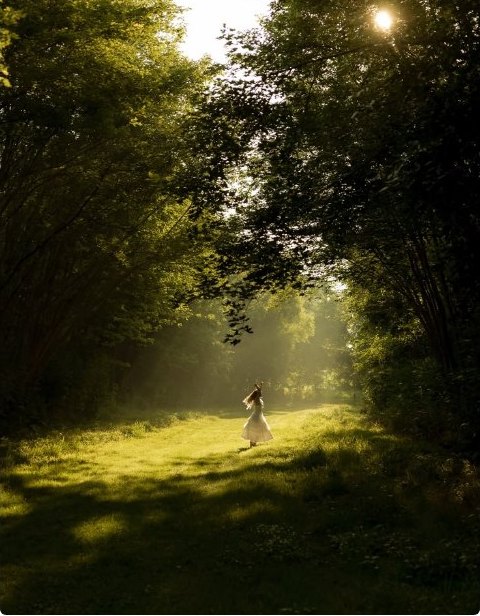
A figure walking a sunlit forest clearing at golden hour

Hi 🌿

Cheryl Strayed walked 1,100 miles of the Pacific Crest Trail alone, at 26, after her mother died and her life fell apart. She wrote about it in Wild. But before that, she wrote an advice column called Dear Sugar — and the advice she gave was some of the most honest writing about living that exists.

This line is from one of those columns:

“You don't have a right to the cards you believe you should have been dealt. You have an obligation to play the hell out of the ones you're holding.”

There's a quiet grief in most people's lives — not for what happened, but for what didn't. The version of the story we thought we were living. The life that was supposed to unfold differently.

Strayed isn't dismissing that grief. She lived it. She's saying something harder: that at some point, you have to stop negotiating with the hand you weren't dealt and start actually playing the one you have.

Not the life you planned. The life you have. All the way in.

Today — what would it look like to play your actual hand with full commitment? Not the hand you wish you had. The one right in front of you.

That's the only game there is.

Have a kind morning.
Sent Tuesday, August 4, 2026 · 6:00 AM PT
Daily · Monday · Productivity

Hidden in your daily routine.

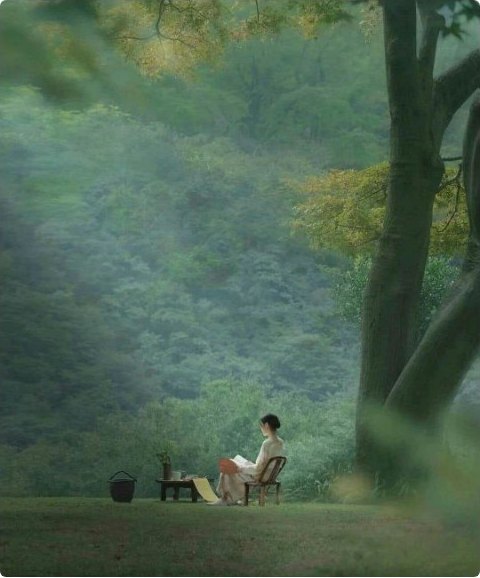
A person reading at a small table on a misty green hillside

Hi 🌿

Robin Sharma spent years studying the habits of world-class performers — athletes, artists, executives, leaders. What he found was less dramatic than most people expect.

It wasn't talent. It wasn't luck. It was this:

“The secret of your future is hidden in your daily routine.”

We tend to think of our future as something that will arrive — shaped by a big break, a key decision, a turning point. But Sharma's observation is quieter and more demanding than that.

Your future is already being written. Right now. In the small things you do — or don't do — each morning before the world gets loud. In whether you read or scroll. In whether you move or stay still. In whether you create something or only consume.

None of these choices feel significant in the moment. That's precisely what makes them so powerful. Compounded over months and years, the ordinary morning becomes the extraordinary life — or it doesn't.

You don't rise to your goals. You fall to the level of your systems.

This Monday — not forever, just today — what is one small thing your future self would thank you for doing this morning?

Start there.

Have a kind morning.

Sent Monday, August 3, 2026 · 6:00 AM PT
Have these in your inbox

A small letter, every weekday morning.

Get tomorrow's letter and every one after. Free. No upsells. Unsubscribe in one click.

Subscribe →