From the archive

September 2026.

5 letters, newest first.

All months · Sep 2026 · Aug 2026 · Jul 2026 · Jun 2026 · May 2026
Daily · Monday · Productivity

Not an act but a habit.

A sunlit dirt path winding through dense summer woodland

Hi 🌿

Aristotle was a Greek philosopher who spent his life studying how human beings actually become good — not in theory, but in practice. He was less interested in ideals than in the mechanics of character: how it forms, how it holds, and how it fails.

He left us this:

“We are what we repeatedly do. Excellence, then, is not an act but a habit.”

This is one of the most quietly radical ideas in the history of philosophy. Most of us believe that character is something you have — a fixed quality, either present or absent. Either you're disciplined or you're not. Either you're the kind of person who does that thing or you're not.

Aristotle is saying something different. Character is not what you are. It's what you repeatedly do. The person who is patient is not born patient — they have practiced patience so many times that it has become who they are. The person who does excellent work doesn't produce it occasionally from some inner reserve. They have made excellent work a habit, and the habit has made them.

This Monday is not a test of who you already are. It's a small contribution to who you are becoming.

You don't rise to the level of your intentions. You fall to the level of your habits. Build the right ones, one Monday at a time.

Today — one small thing, done well, repeated. That's the whole idea.

Have a kind morning.

Sent Monday, September 7, 2026 · 6:00 AM PT
Daily · Friday · Books

The will to be generous.

One climber reaching down to help another up a ridge at sunset

Hi 🌿

bell hooks was an American author, professor, and cultural critic who wrote more than thirty books on love, race, gender, and the possibilities of community. Her writing was always in service of connection — of helping people see each other more clearly and treat each other more honestly.

From All About Love, one of her most widely read works:

“The will to be generous is one of the highest spiritual callings.”

Notice she says will — not the act, not the feeling, not the capacity. The will. The decision, made in advance, to orient yourself toward giving rather than withholding. Toward opening rather than closing. Toward the other person rather than retreating into yourself.

Generosity, in hooks' framing, isn't primarily about money or time, though it includes both. It's an inner posture. It's choosing, when someone needs something you have, to give it freely. It's choosing, when someone is struggling, to meet them where they are rather than where you wish they were.

It is a calling because it isn't easy. The natural pull is often the opposite — to protect, to preserve, to keep what we have. The will to be generous asks us to move against that pull. Deliberately. Repeatedly.

Generosity is not something you feel and then do. It's something you decide, and then feel.

This weekend — who in your life could use something you have? Not necessarily money. Maybe attention. Maybe patience. Maybe simply the words: I see you, and I'm here.

Have a kind weekend.

Sent Friday, September 4, 2026 · 6:00 AM PT
Daily · Thursday · Productivity

One thing that scares you.

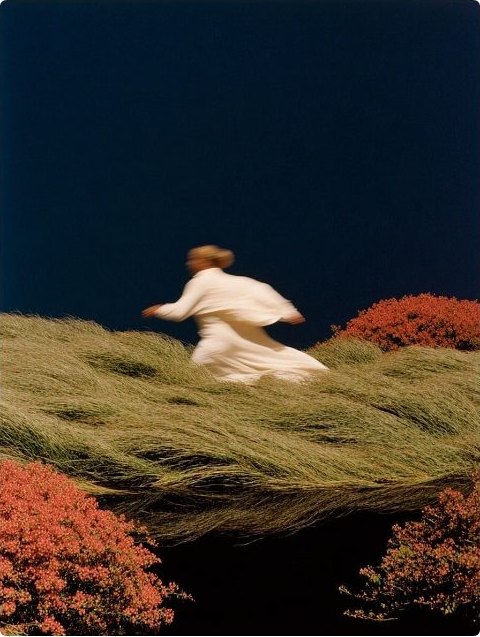
A figure moving through windswept grass at dusk beside autumn shrubs

Hi 🌿

Eleanor Roosevelt was First Lady of the United States for twelve years, and spent much of her life doing things she found genuinely frightening — public speaking, political advocacy, travel to war zones. She was, by her own account, a shy and fearful person who chose, repeatedly, to act anyway.

From that life of deliberate courage, she offered this:

“Do one thing every day that scares you.”

It's easy to read this as a call to grand gestures. But Roosevelt meant something smaller and more sustainable than that. Not one terrifying leap per day — one small thing. The email you've been avoiding. The conversation you keep putting off. The idea you haven't said out loud yet because what if it doesn't land.

The fear doesn't have to be dramatic to be real. And the doing doesn't have to be dramatic to matter.

What Roosevelt understood — from her own experience of being afraid and acting anyway, over and over — is that courage is less a quality you have and more a practice you build. Each small act of doing the slightly scary thing makes the next one fractionally easier. The threshold shifts.

You don't become brave and then do the hard thing. You do the hard thing, and that is what becoming brave looks like.

This Thursday — one thing. Not the biggest one. Just one that has been sitting there waiting. Do it today.

Have a kind morning.

Sent Thursday, September 3, 2026 · 6:00 AM PT
Daily · Wednesday · Wisdom

The absurdity of writing.

Reading in the roots of an enormous tree against an open sky

Hi 🌿

Wisława Szymborska was a Polish poet who won the Nobel Prize in Literature in 1996. She wrote with rare wit and precision — poems that found the profound inside the ordinary, and never took themselves too seriously while doing it.

She said this, and meant every word:

“I prefer the absurdity of writing poems to the absurdity of not writing poems.”

There's something quietly radical tucked inside this line. She isn't claiming poetry is important, or that art matters, or that the world needs more of what she makes. She's doing something more honest: acknowledging that the whole endeavor is a little absurd — and then choosing it anyway.

Because the alternative — not writing, not making, not trying — is equally absurd. Possibly more so.

This applies far beyond poems. Whatever the thing is that you make, pursue, or care about — the creative project, the practice, the dream you keep returning to despite the odds — there will always be a voice that points out how unlikely it all is. How impractical. How perhaps a bit much.

Szymborska isn't arguing against that voice. She's just noting that silence is its own absurdity.

Between two absurdities, choose the one that feels like living.

This Wednesday — what is the thing you keep almost doing? The absurdity of doing it is no greater than the absurdity of not.

Have a kind morning.

Sent Wednesday, September 2, 2026 · 6:00 AM PT
Daily · Tuesday · Wisdom

However strange that self may be.

A figure standing in a field of golden wildflowers in soft haze

Hi 🌿

May Sarton was an American poet and novelist who spent decades writing about solitude, creativity, and the quiet courage it takes to live as yourself. She kept journals for much of her life — honest, unguarded records of what it costs to choose authenticity over approval.

She left us this:

“We have to dare to be ourselves, however frightening or strange that self may prove to be.”

Notice she doesn't say it will be comfortable. She doesn't promise that being yourself will be met with understanding, or that the self you find will be tidy and presentable.

She says frightening. She says strange.

Most of us spend enormous energy managing how we appear — softening our edges, muting what might unsettle, presenting the version of ourselves most likely to be accepted. It is exhausting work. And it keeps the actual self — the strange, particular, irreplaceable one — perpetually waiting in the wings.

Sarton is not prescribing radical oversharing or performance. She's pointing at something quieter: the private act of stopping the performance. Of letting yourself, in at least some corner of your life, simply be what you actually are.

The self that needs to be managed is never fully at rest. The self that is allowed to be strange is finally home.

This Tuesday — where are you performing? And where might you let yourself just be? Even a little. Even just for now.

Have a kind morning.

Sent Tuesday, September 1, 2026 · 6:00 AM PT
Have these in your inbox

A small letter, every weekday morning.

Get tomorrow's letter and every one after. Free. No upsells. Unsubscribe in one click.

Subscribe →